
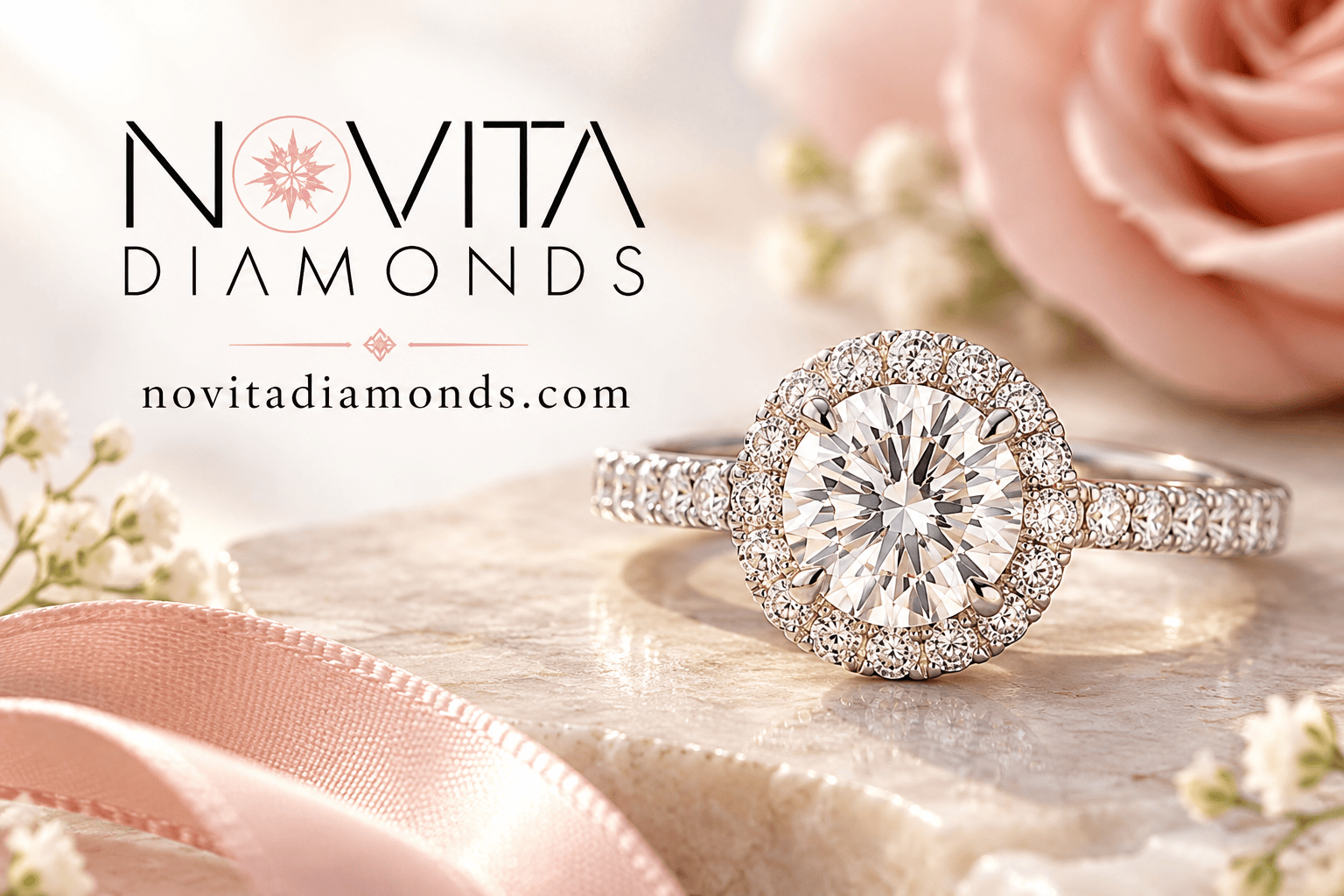
A diamond doesn’t have to be exceptionally large to create an impressive engagement ring. Sometimes, the arrangement of smaller stones around it makes the greatest visual difference.
That is the appeal of a halo setting. By surrounding the centre diamond with carefully positioned accent diamonds, the design creates a broader outline and additional sparkle without requiring a larger centre stone.
However, the most attractive halo rings are rarely determined by diamond size alone. The proportions of the surrounding stones, the height of the setting and even the shape of the wedding band can influence how the finished ring looks and feels.
Understanding these details makes it easier to distinguish a thoughtfully designed ring from one that simply appears impressive in photographs.
What Makes a Halo Setting Different?
A traditional halo engagement ring features a central gemstone surrounded by a continuous arrangement of smaller diamonds, often called melee diamonds.
These smaller stones reflect light around the centre diamond, making the overall design appear larger when viewed from above.
The effect depends heavily on proportions.
A narrow halo with delicate accent diamonds can create a subtle frame, allowing the centre stone to remain visually dominant. A wider halo produces a more pronounced outline, although it may make the individual centre diamond less distinct.
This creates an interesting design decision: should the halo enhance the main diamond or become a prominent feature itself?
Neither approach is inherently better. The answer depends on the wearer’s preference for delicate detailing or a more substantial appearance.
Diamond Shape Changes the Entire Character of the Ring
The centre diamond’s shape influences how the surrounding halo should be arranged.
Round brilliant diamonds work naturally with circular halos, producing a balanced, symmetrical outline. Oval diamonds create an elongated appearance, particularly when the surrounding stones follow the centre diamond’s proportions.
Cushion-cut diamonds introduce softer corners and can suit both modern and vintage-inspired settings.
Other shapes require closer attention to craftsmanship:
- Pear-shaped diamonds: The halo should follow the tapered tip without creating an awkward or excessively pointed outline.
- Emerald-cut diamonds: Their stepped facets produce a different light pattern from brilliant-cut halo diamonds, creating deliberate visual contrast.
- Princess-cut diamonds: The surrounding arrangement should complement the square outline while protecting vulnerable corners.
- Marquise diamonds: Carefully proportioned halos can emphasise the elongated silhouette, but excessive width may reduce its elegance.
The size of the accent diamonds also matters. If they are disproportionately large, the central shape can become difficult to distinguish.
For fancy-shaped diamonds, comparing photographs and videos from several angles can reveal proportion issues that may not be obvious in a conventional product image.
A Larger Appearance Without a Larger Centre Diamond
Halo settings are particularly interesting for buyers balancing visual impact against diamond specifications.
A smaller centre diamond surrounded by well-matched accent stones may occupy a similar visible area to a larger solitaire. However, the two rings will not look identical.
A solitaire presents one uninterrupted diamond surface. A halo creates multiple reflections and a more detailed outline.
Buyers exploring halo engagement rings can compare these visual differences alongside centre-stone size, diamond shape and setting design rather than relying on carat weight alone.
Carat measures weight, not the dimensions visible from above. Two diamonds with identical carat weights can have different face-up measurements depending on their shape and proportions.
For this reason, requesting millimetre dimensions alongside carat weight is useful, particularly when comparing oval, cushion and round diamonds.
The Setting Height Deserves More Attention
A ring can look beautifully proportioned from above yet feel impractical during everyday activities.
The height of the centre setting determines how prominently the ring projects from the finger.
A higher setting can provide space for a wedding band to sit closer to the engagement ring. However, it may also be more likely to catch on clothing or come into contact with surrounding objects.
Lower settings generally create a more compact profile, although the surrounding halo or supporting metalwork may prevent a straight wedding band from sitting flush.
The structural design matters as much as the height itself.
A jeweller should be able to explain how the centre diamond is secured, whether the halo has adequate support and how accessible the small stones are for future inspections.
Someone who regularly works with their hands may prefer a lower-profile design with a plain band instead of an elaborate pavé-covered shank.
Traditional Halos and Hidden Halos Create Different Effects
Although the terminology sounds similar, these settings produce noticeably different appearances.
A traditional halo surrounds the centre diamond in a visible frame when the ring is viewed from above. Its main visual effect is to increase the apparent spread and sparkle of the centre setting.
A hidden halo places small accent diamonds around the gallery or base of the centre setting, generally making them more visible from the side.
This distinction matters because a hidden halo does not normally provide the same face-up size enhancement as a conventional halo.
Someone who prefers the clean outline of a solitaire but appreciates additional side detailing may favour a hidden halo.
A traditional halo is more suitable when the surrounding diamonds are intended to become part of the ring’s visible silhouette.
Where Lab-Grown Diamonds Fit Into the Decision
Lab-grown diamonds have essentially the same chemical composition, crystal structure and optical properties as natural diamonds. Their origin differs, but both can be used in traditional and contemporary halo settings.
For buyers in Australia, comparing lab diamonds and natural centre diamonds can help clarify the trade-off between diamond size, grading characteristics and overall ring design.
Regardless of origin, centre-stone quality deserves attention.
Cut quality strongly influences brilliance, particularly in round brilliant diamonds. Colour and clarity should be evaluated in relation to the individual stone, its appearance and the surrounding setting.
Where an independent diamond grading report is available, examine the measurements, proportions and identifying details rather than treating the overall grade as the complete assessment.
It is also sensible to ask whether the halo’s smaller diamonds are matched for colour and appearance. Noticeably inconsistent accent stones can distract from an otherwise attractive centre diamond.
Plan the Wedding Band Before Finalising the Engagement Ring
One easily overlooked detail is how a halo engagement ring will sit beside a wedding band.
The halo may extend beyond the ring’s shank, creating a gap between the two rings when worn together.
A curved or contoured wedding band can accommodate this shape, while some ring designs allow a straight band to sit closely underneath the centre setting.
Neither arrangement is automatically preferable. A small gap can be a deliberate design choice.
Before ordering, consider the appearance of both rings together, including their combined width and how their metal surfaces contact each other.
For custom engagement rings, requesting a side-profile drawing or digital rendering of the complete bridal set can prevent unexpected fitting issues.
Craftsmanship and Long-Term Wear
The small diamonds that give a halo its distinctive appearance also introduce additional setting components that require attention.
Each accent diamond needs secure placement. Over time, exposed prongs or delicate metalwork can experience wear, particularly if the ring regularly receives knocks.
A practical inspection should address several details:
- Whether the accent diamonds sit evenly around the centre stone.
- Whether the surrounding prongs appear consistent and properly finished.
- Whether the underside of the setting allows access for careful cleaning.
- Whether future resizing could affect diamonds positioned along the band.
- Whether the jeweller offers inspections and repairs for small accent stones.
Metal selection can influence maintenance as well. Platinum and gold are both established choices for engagement rings, but their wear characteristics and finishing requirements differ. White gold may require occasional rhodium replating to maintain its bright white appearance.
For Australian buyers ordering online, confirming ring sizing, delivery arrangements, resizing conditions and custom-order return terms before payment is equally sensible.
A halo ring should retain its appeal beyond the proposal itself. Well-considered proportions, secure stone settings and compatibility with a wedding band make a meaningful difference to how comfortably the design can be worn and maintained for years.

